Benjamin Franklin’s asbestos purse

I saw reference to Franlin’s asbestos purse in Abratt, R. P., D. A. Vorobiof, et al. (2004). “Asbestos and mesothelioma in South Africa.” Lung Cancer 45, Supplement(0): S3-S6. , futher information from www.ingenious.org.uk . The image deriveds from from the Natural History Museum and they indicate the material is tremolite.

Money to burn: Benjamin Franklin’s asbestos purse

Benajmin Franklin's asbestos purse

When 19-year-old Benjamin Franklin arrived in London in 1724, he brought a small pocket purse made of asbestos. Short of funds, Franklin contacted Hans Sloane, a noted collector of curiosities, and offered to sell it. Sloane was later President of the Royal Society of London [suceeded Issaac Newton], and in 1754 passed his collection to the British Museum [this was part of the collection that went to the Natural History Museum], where the purse remains. The original specimen label states the purse was from ‘Mr Franklyn, from New England’. Less clear is where the asbestos originated. Though it has been suggested that the purse came to America with an immigrant, its American provenance is equally probable. It could have been made from Pennsylvania ‘mountain flax’, or salamander stone as asbestos was known in the colonial period because of a long-standing belief that the amphibian could withstand fire. It more likely came from Newbury, near Boston, where agriculturists digging for lime occasionally uncovered asbestos. Occurring as easily separable aggregates with foot-long fibres, Newbury asbestos was used to make lamp wicks in nearby weaver colonies. A century after Sloane’s purchase, asbestos was no longer a precious curiosity, but a potentially lucrative industry. More than 70 deposits of the mineral were recorded in the United States. The first large-scale mining operations began in 1818 after James Pierce discovered asbestos at Quarantine, Staten Island, New York.

Print Friendly

Street View and Occupational Hygiene

I regularly use Google Maps and Google Earth in my preparation for a site visit. Its sometimes the only real details I have of a workplace before I arrive, particularly when it is on a large site. Street View compliments that at the ground level.

I was intrigued to see that Google is now starting to digitise monuments in Iraq with the Google Art Project.

The National Museum of Iraq in Baghdad hosts a staggering wealth of artifacts from the earliest human settlements. Now you can explore this museum and its 6,000 year-old treasures even if you can’t make the trip to Baghdad. When you see an exhibit you like, take a closer look with 360-degree views ofindividual antiquities. Read more on the Google Lat Longblog or if this has whet your appetite for more, you can visit other museums with the Google Art Project.”

Wouldn’t it be great to preview a workplace quickly before visiting. It would save a lot of time and even allow a crude virtual  walk though survey anywhere in the world.

The technology already exists to do this in real time using a person wearing a camera to telemeter images and sounds to a person sitting in an office, with the office professional directing the person on the ground where to go and point. Well done, it could be 90% of the solution and much quicker. Video overlay is a fairly well established tool in occupational hygiene to allow the presentation of monitoring instrument data on to of the video and as a data stream. The real limitations are communications bandwidth and latency.

I developed a six channel Video Exposure Monitoring (VEM) system that would also telemeter physiological measurements for heat stress, when I was doing work with people wearing protective clothing on high voltage power lines in summer. A lot of fun occupational hygiene toys are just around the corner.


Print Friendly

Occupational Asthma

One of the problems with Occupational Hygiene is that the advances, particularly in molecular biology, make keeping up with occupational diseases very difficult, particularly as hygienists have to cover such a wide range of diseases. These advances are rarely reflected in the mainstream occupational hygiene journals. The advances in understanding asthma are one case in point.

The New England Journal of Medicine (NEJM) has just published a paper (31 August 2011)

A beautiful picture accompanies the article and illustrates the complexities of the cellular interactions. I hope that close study of the article will highlight the gaps in my knowledge in applying it to occupational exposures and their control.


Print Friendly

The Shape of a Nose

The Scientific American September 2001 has an article by Joan Raymond The Shape of a Nose  that has implications for inhalation toxicology. [The original article is
Noback, M. L., K. Harvati, et al. (2011). "Climate-related variation of the human nasal cavity." American Journal of Physical Anthropology 145(4): 599-614]

“Scientists have long been interested in the relation between a nose’s form and its function. New research is showing that climate may have played an important role in how the nose’s internal structure evolved.

Researchers in Germany recently showed that individuals from cold, dry climates, such as Greenland or Siberia, had higher and narrower nasal cavities than those from hot, humid climates, such as Papua New Guinea or Gabon. The German team, led by Marlijn Noback of Eberhard Karls University of Tübingen, took computer-aided measurements of the nasal cavities of 100 skulls representing 10 human groups living in five different climates. They found that the nasal cavities of cold, dry climate populations are relatively high and show a larger and more abrupt change in diameter in the upper part of the cavity than those of hot, humid climate populations. Her research was published online in the American Journal of Physical Anthropology this past June.

This narrowing of the nasal passage enhances contact between the air and the mucosal tissue, which helps to warm and humidify that air, Noback notes. Cold, dry climate populations also show a relatively longer nasal cavity, giving this population more space in which to bring incoming air in line with body temperature. Microscopic hairs called cilia, which line the nasal passage, help to keep out pathogens and dust that may infect or irritate the lungs, and the cilia work more efficiently when incoming air is moist. “Proper heating and humidification of air in colder climates are important for respiratory health,” says paleoanthropologist Nathan Holton of the University of Iowa.  In warm-climate-adapted populations, inhalations are not directed toward the narrow upper part of the nasal cavity for warming. So “people from warm climates, moving into cold climates, could be more susceptible [to] colds and related diseases,” Noback says. 

Which sort of nose do you have? Although you can’t tell much about the external shape of the nose when looking at its internal structure, a narrow, longer internal cavity is generally linked to a relatively narrower and more projecting nose, Holton says”

It is not clear from this excerpt what the implications are for Eskimos and other Asiatic people with flatter noses who live in cold climates. I must read the article.

The velocity of air in the nose and the sharpness of changes in direction have great effects on particle deposition. If “nasal cavities of cold, dry climate populations are relatively high and show a larger and more abrupt change in diameter in the upper part of the cavity than those of hot, humid climate populations”, then for people with high nasal velocities and sharp changes  in the direction of air:

  • fewer respirable particles should deposit in the respiratory tract and the incidence of some lung diseases should be lower
  • the incidence of neoplasms in the nasal cavity should be higher.

In a paper I presented in 1988 (Bromwich, D. W. The Nose, Can you trust it? Melbourne, Australian Institute of Occupational Hygienists)  I referred to an article that suggested nasal hairs had a significant influence on silicosis. I’ll have to chase that up and re-examine the data.

Print Friendly

Tripoli

The final battle for Tripoli is all but over, but I have been watching the developments with interest. Twitter seems to be one of the main sources of information, with almost continual tweets, though most tweets last night (Brisbane time) were from spectators in other counties, sometimes with a direct tie to Libya.

Through the haze of contradictory information, it was obvious that something significant was happening, hours ahead of any formal news announcement. I was particularly interested in the information flow from #mermaiddawn on Twitter and the continuosly updated conflict information on Google Maps.


Twitter gave a link to a Google Map that was updated every few minutes, Gaddafi’s forces were coloured green, the opposition red and undecided yellow. This is how it looks now, with the old Libyan fag over Tripoli and no green pointers to be seen, though the Tweets above indicate intense fighting is still occurring. (FF is Freedom Fighters)

I found a sense of directness when reading a Tweet from someone asking for help for someone who was injured or giving the co-ordinates of a rooftop sniper. It still had a surreal quality to it.

Print Friendly

Next Friday

The meaning of “this Friday” is clear to most, but the term “next Friday” is ambiguous.

The rationale appears to be

  • This week – this Friday
  • Next week – next Friday (or “Friday week”)

To confuse matters, some people say “this Friday” if you are earlier in the week. But if you say “next Friday” you mean the week later.

“Friday week” always means a week from the Friday that’s soonest.

Friday next week” is also clear as is “Friday week

http://dictionary.reverso.net/english-cobuild/next (Collins)

 You use next in expressions such as next Friday, next day and next year to refer, for example, to the first Friday, day, or year that comes after the present or previous one. 

I was unaware of the confusion until yesterday, and will now avoid terms like “next Friday

Print Friendly

The problems with armour

Chemical suits often limit activity to perhaps 20 minutes to half an hour. Image what is is like to work in medieval armour? It may have lead to the defeat of the stronger French armour in the Battle of Agincourt.

Armour treadmill

Dr Graham Askew (biomechanics) at the University of Leeds has tested replica 15th-century armour on a treadmill.

The modern-day knights used 2.1 to 2.3 times more energy walking with their armor on compared with walking without it. Running with armor took 1.9 times the energy as running armor-free.

The result, Askew said, is that men in armor end up moving much more slowly than men without armor. This effect is only exacerbated with age: At his maximum aerobic capacity, an average 38-year-old man could cover about 5.5 feet (1.7 meters) per second, compared with 8.8 feet (2.7 m) per second for an unarmored 38-year-old. With a maximum walking speed of 4.6 feet (1.4 m) per second, an armored 55-year-old would have trouble keeping up.

From the BBC website

In the Battle of Agincourt in 1415, French knights were defeated by their English counterparts, despite the fact that they heavily outnumbered them. The … study suggests that the armour-clad French, who had to trek through a muddy field to meet the stationary English line, were so slowed and exhausted by their march that they would have stood little chance.

See Royal Society Proceedings B: Limitations imposed by wearing armour on Medieval soldiers’ locomotor performance

Print Friendly

Flood silt and respiratory protection

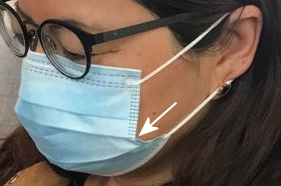
Our locall free newspaper (City South News, Wednesday July 23 2011) had an article on the front page showing a young girl helping clean up the South’s Cricket Ground after the floods earlier this year. This is a scan of part of the front page, with the face mask enlarged and inset to show the fit.

Flood mud RPE 2011There is no way that the face mask could seal against the wearer’s face. It’s and adult mask and far too large for a start, so any protection against respirable dust from the silt would be minimal.

Queensland University of Technology has a program “Flood study to examine health effects of mould and mud” [February 2011] lead by Professor Lidia Morawska, who has a great indoor air quality laboratory.She notes

“mould and dust from waterlogged materials and silt and organic debris in flood-affected areas could impact on residents’ respiratory health, with the greatest effect typically seen in children and asthmatics”.

The child in the photo would have to be exposed to dust from the silt – and perhaps more so than the adult as she is closer to the ground.

I don’t know what the microbiological risk is, but it appears few cases of respiratory illness have been reported, though I suspect there would be gross under-reporting. There have been at least three cases  of leptospirosis from the Queensland Floods.

The sister newspaper City North News reported [January 19 2011] “be alert of the health issues associated with the flood event” but does not seem aware of the issue of toxic dust from the silt. The sister paper City North News reported “… the thick, toxic sludge covering its Tennyson [adjoining suburb] fields. E. coli has been detected in the muck, leaving the grounds unusable….”

There seems to be an amnesia between what is reported one week and and the next.


Print Friendly

SPF50+ Sunscreen

Standards Australia is planning to introduce a 50+ category for sunscreens with the publication of DR AS/NZS 2604 Sunscreen products—Evaluation and classification, but I think the idea is wrong.  I have reviewed the new draft standard and strongly support the Cancer Council’s view that the SPF50+ rating will lead people to think that they will really get a lot more protection. I also have concerns that the protocol for water resistant claims is wildly optimistic as sitting in a spa of fresh warm water hardly emulates swimming in the surf on a summer day.

Public comment on the draft standard closes July 18 2011 Continue Reading…

Print Friendly

Android applications

I like toys and my latest is a cheap Android phone – a Garmin Asus A50 – great GPS and not a bad Android operating system for under AUD$200. Its really a GPS with a phone capability.

Naturally I am interested in what can be done, particularly with the camera, WiFi and Bluetooth facilities. I have also found a quite good spirit level and a heart rate monitor (my phone does not have a flash, so the ambient light acts as the light source for a crude oximeter-like device. It may even be possible to estimate blood oxygen saturation with a similar approach. The frequency reposne of the microphone and accelerometers limit their use as sound level meters/ noise dosimeters and vibration meters. Similarly there are Andoid applications using the light sensor as a crude luxmeter. A stethescope has been a great hit for the iPhone, with millions of downlaods. The ability to geotag photos on large or remote sites is a definite plus.

I was intrigued to find an android camera applicataion for air visbility monitoring – Visibility Monitoring using Mobile Phones, but I am yet to test it – too many trees obscure the skyline.

Print Friendly